
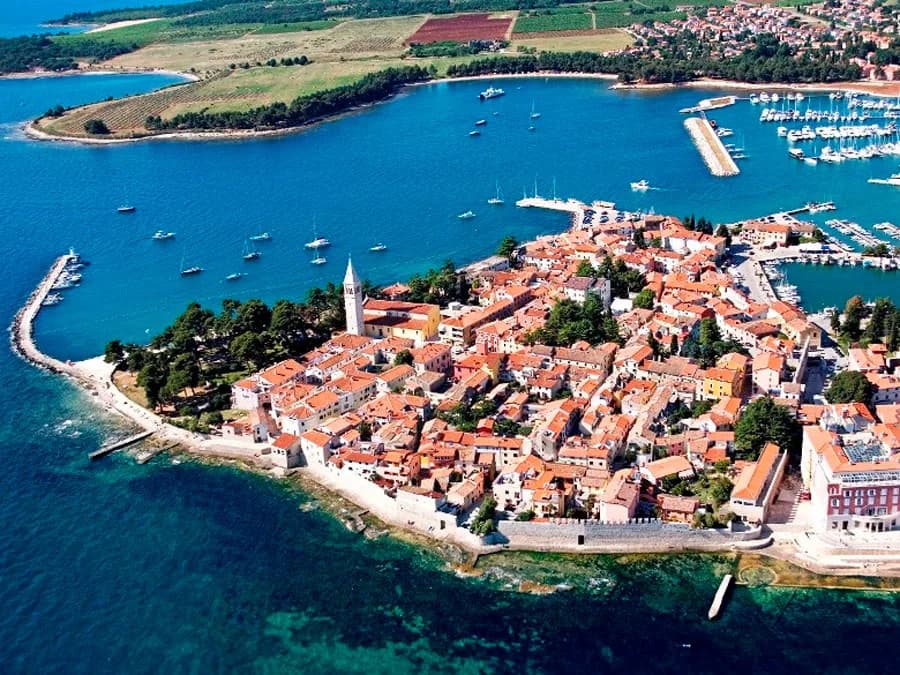
Destinations
Istria place by place — from Motovun to Medulin.
Pula
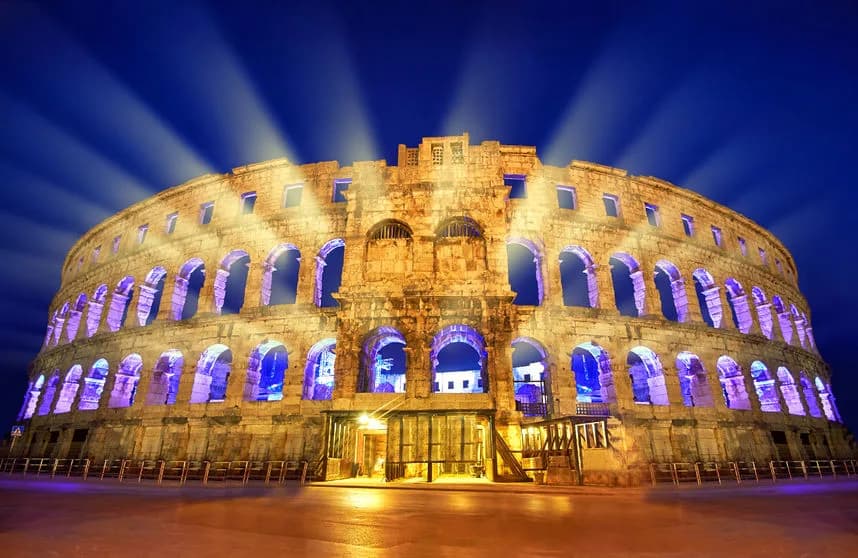
Pula is Istria’s largest and oldest city, with some three thousand years of history, a busy calendar of events and beaches within easy reach of the centre. Thanks to its coastal position, many holiday villas in the Pula area enjoy sea views, and Lovely Istria offers a range of homes to rent here – from houses in town to quiet stone houses in the surrounding villages. The city is full of well-preserved Roman monuments. Don’t miss the Arena, the world’s sixth-largest Roman amphitheatre, the Arch of the Sergii and the Roman mosaic The Punishment of Dirce. In summer the Arena hosts festivals and concerts, so there is always something on. The places around Pula have just as much to offer. Explore the beaches along the coast from Štinjan to Barbariga and visit Brijuni National Park, reached by boat from nearby Fažana. Vodnjan, Fažana and Galižana are covered in the Vodnjan - Fažana area. ## Roman Pula The Arena from the 1st century dominates the harbour, but Roman Pula is more than that. On the Forum, once the centre of the Roman town, stands the Temple of Augustus, and beside the Arch of the Sergii you will find the Twin Gates, a surviving part of the old town walls. Above the old town rises the Kaštel, a 17th-century fortress with views over the whole town and the harbour. It houses the Historical and Maritime Museum of Istria. All of this can be seen on foot in a single morning. Pula is also a town that Austria-Hungary built up as its main naval port. The market hall, an iron-and-glass building from 1903, is still where locals buy fish, vegetables and olive oil. The Irish writer James Joyce lived and taught in Pula for two years, in 1904 and 1905, and a statue of him stands in the centre of town. ## The sea and the beaches The coast around Pula is deeply indented, with many coves and seaside paths. The Verudela and Stoja peninsulas offer swimming and shade, and the Pula Aquarium, set in a fort on Verudela, is a good choice for a rainy day with children. The beaches are mostly rocky or pebbly and the sea is clear. To the north the coast leads towards Štinjan and Barbariga, and to the south towards Medulin and Cape Kamenjak. Barbariga and Emily Beach appear in our villas’ data as the nearest beaches for several houses, along with Pomer, Puntižela and Kavran cove. ## Where the villas are Lovely Istria has 16 houses in and around Pula: some in the town itself and others in surrounding places such as Valtura, Klarići, Loborika, Muntić, Jadreški, Juršići, Čabrunići, Šikići and Pješčana Uvala. The nearest villa is about 650 m from the sea and most are a few kilometres away, while the farthest is about 10 km. From Pula Airport some villas are only 1.5 km away and the farthest about 16 km. In many villages the village centre is close at hand, and some villas stand within 70 m of it. These distances are measured on the map, as the crow flies, so the actual drive is usually a little longer. ## Food and drink In Pula you eat what the sea and the Istrian countryside provide: fresh fish, squid and shellfish, and alongside them olive oil, truffles, homemade pasta such as fuži and pljukanci, and the wines Malvazija and Teran. The best place to start is the market, where you will find local cheeses, cured ham and vegetables.
18 houses
Read more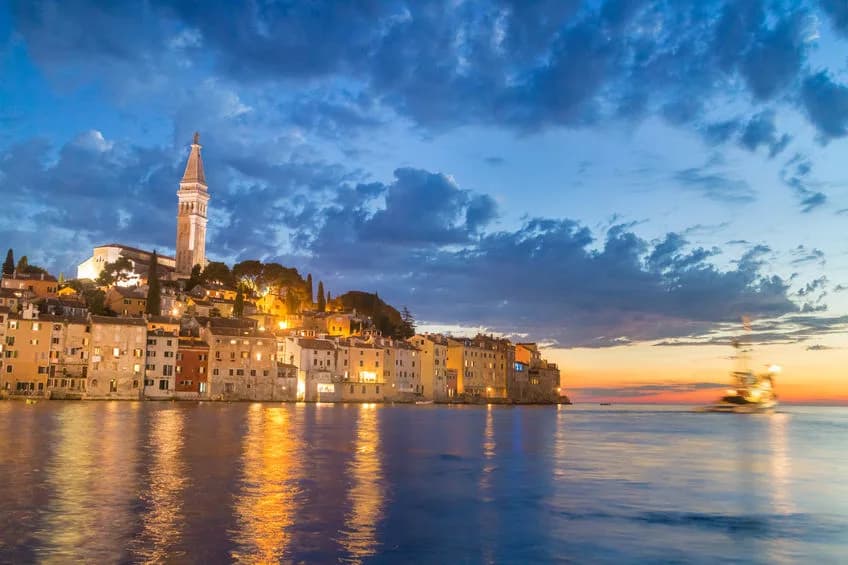
Rovinj
Rovinj is a favourite with travellers from all over the world, and together with its surrounding villages it is one of the most visited areas in Croatia. A medieval old town on a peninsula, views of the deep blue sea and the sounds and scents of nature are only part of Rovinj’s magic. Many international travel magazines and websites name Rovinj a must-see, and its nickname, “the Pearl of the Adriatic”, is well deserved. ## The old town and the sea Rovinj’s old town sits on a peninsula that was an island until the channel separating it from the mainland was filled in, in 1763. Narrow stone streets climb from the harbour to the baroque Church of St Euphemia, whose bell tower, about 60 metres high and modelled on the campanile of St Mark’s in Venice, can be climbed for a view over the rooftops and the islands. On the way up, the Balbi Arch and Grisia, the street of artists’ studios and galleries, are worth slowing down for. Rovinj is officially bilingual, Croatian and Italian, and you will often see both languages side by side on signs. Down in the harbour, look for the batana, the flat-bottomed wooden boat that local fishermen have used for generations. South of the town, the Zlatni rt (Punta Corrente) forest park, laid out in the 19th century, has shaded paths along the coast and places to swim, which makes it a good choice for a morning walk or a dip. ## Day trips around Rovinj A short boat trip takes you to St Catherine’s Island and the Red Island opposite the town, both part of the Rovinj archipelago. On the mainland, the Lim Channel, a deep sea inlet fringed by woodland, and the Palud nature reserve, a protected wetland good for birdwatching, are well worth a visit. The ruins of Dvigrad, a medieval town abandoned in the 17th century, and the little medieval town of Bale, with its Venetian-style houses and castle, are close by too. Pula with its Roman Arena and Poreč with the Euphrasian Basilica are each a day trip away. ## Where the villas are Our villas are in and around Rovinj: in the villages of Sošići, Golaš and Rovinjsko Selo, and in Bale. One villa is close to Rovinj itself, about 2 km from the town centre. Some villas are about 2 km from the sea, others lie inland, 6 to 12 km from it. From every villa it is roughly 23 to 29 km to Pula Airport. In the villages the centre is mostly within a kilometre; for day trips and beaches a car is useful. These distances are measured on the map from each house, as the crow flies, so the actual drive is usually longer. ## Food and drink Rovinj’s restaurants are known for fresh fish and seafood, and the countryside behind the town for what Istria is famous for: olive oil, truffles, homemade pasta such as fuži, and the white Malvazija wine.
9 houses
Read more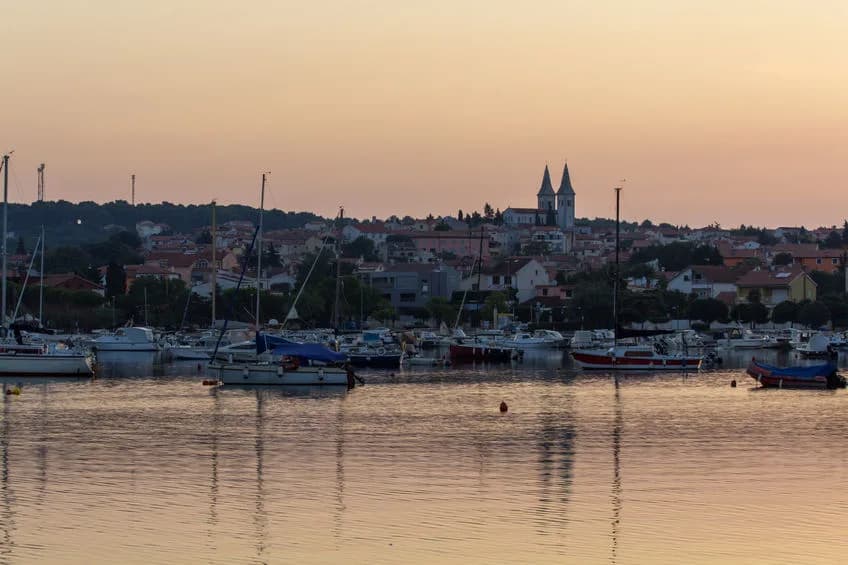
Medulin
The Medulin Riviera is one of the best-known holiday areas on the entire Adriatic. It is made up of six attractive places right on the coast at the southern tip of Istria: Medulin, Premantura, Pomer, Banjole, Vinkuran and Pješčana Uvala. Besides its lovely natural setting, the riviera offers plenty for families, couples and solo travellers alike, from sports and entertainment to shopping and relaxation. Holiday villas in and around Medulin are ideal for a summer by the sea. For an unforgettable taste of unspoilt nature, set aside a day for Cape Kamenjak: gravel roads lead to kilometres of rocky and pebbly beaches, with stunning views and the scent of Mediterranean herbs. ## Kamenjak and the southern tip of Istria Cape Kamenjak, near Premantura, is the southernmost part of Istria and a protected landscape. Gravel roads and paths lead to a string of coves with rocky beaches, and swimming is possible almost everywhere, which makes it a good place for a day with a towel and a bottle of water. Premantura is also well known among windsurfers and kitesurfers. Medulin Bay has shallow coves that suit children, and small boats also go out to the islets of the Medulin archipelago. ## Pomer, Ližnjan and quieter corners Pomer is a quiet fishing village with beaches, and Ližnjan is a village above the sea with calm streets. Medulin has restaurants, shops and a seaside promenade, and Šišan is a quiet village nearby. Pula with its Arena is not far, so a day at the beach is easily swapped for a day in town. ## Where the villas are Lovely Istria has seven houses on the Medulin Riviera: three in Pomer, two in Ližnjan, two in Medulin and one in Šišan. The sea is close: the nearest villa is only 40 m from it and the farthest about 2.4 km, with most at around 1.4 km. The nearest beach is 720 m to 2.3 km away, and the village centre 80 to 780 m. A restaurant is 90 m to 2.1 km away and a shop 110 m to a kilometre. Pula Airport is 7 to 8.4 km away. These distances are measured on the map, as the crow flies, so the actual drive is usually longer. ## Food and drink Medulin is a place for fish and seafood: the konobas by the harbour serve fresh fish, squid and shellfish, and for something more Istrian look for fuži and pljukanci. White Malvazija goes with it, and olive oil from local estates can be bought to take home.
7 houses
Read more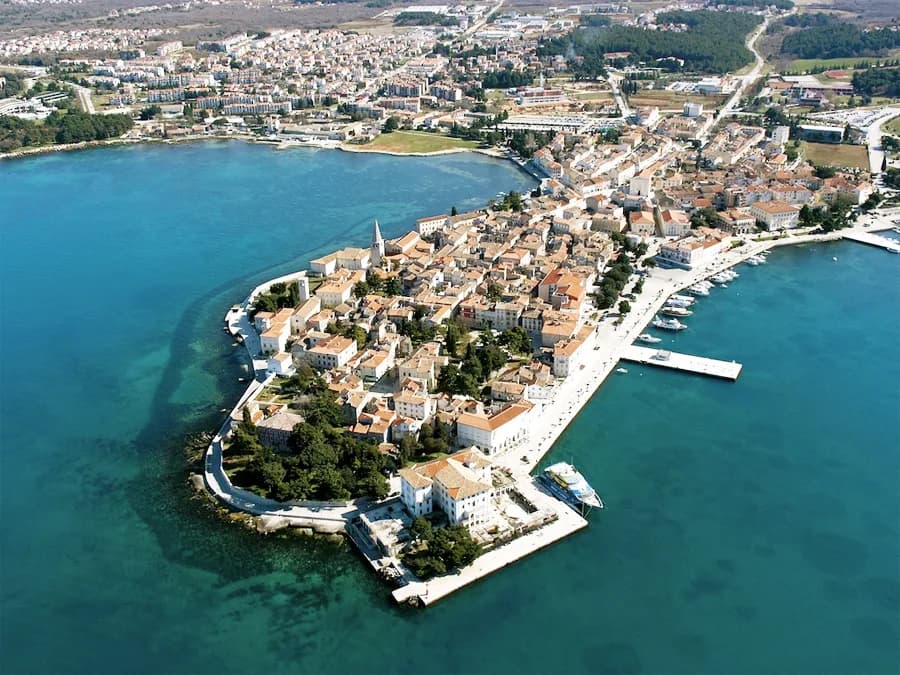
Poreč
Poreč is a small town but one of the centres of Croatian tourism. It lies on the west coast of Istria and offers beautiful nature, a rich historical heritage and a pleasant climate. The town has about two thousand years of history, and its greatest landmark is the Euphrasian Basilica, a UNESCO World Heritage Site. Through the heart of the old town runs the Decumanus, the Roman main street, which is still lined with shops, cafés and restaurants. In this area Lovely Istria offers holiday villas around Višnjan, in Markovac and in the surrounding villages of western Istria. All have a private pool and stand on quiet hilltops among olive groves and vineyards. From most of them the sea is seven to ten kilometres away, so Poreč and its beaches are half an hour’s drive, and you return to the quiet of the village. Višnjan is a small town known for its observatory, and clear nights above this part of Istria offer a view of the sky you will not see in a city. During your stay it is worth taking a trip to the Baredine cave or spending a day at the Aquacolors water park. The villas are a good choice for families and larger groups who want privacy and quiet while still having the sea, restaurants and attractions within reach. ## Poreč and its heritage The Euphrasian Basilica dates from the 6th century and is best known for the golden Byzantine mosaics in its apse. Beside it, it is worth seeing Marafor square, the Roman forum with the remains of temples, and exploring the narrow streets of the old town on its small peninsula. An evening stroll along the waterfront is one of the town’s favourite pastimes, and small boats leave the harbour for the nearby island of St Nicholas. From Poreč there are several fine day trips towards Rovinj and inland Istria. To the south lies Vrsar with its stone centre above the sea, and the Lim Channel is close. Inland are Motovun and Grožnjan, an artists’ town on a hill. The Parenzana cycling trail, the route of the former railway from Trieste to Poreč, also runs through this part of western Istria. ## The sea and the beaches Poreč has maintained town beaches and larger resorts south of the town, such as Plava Laguna and Zelena Laguna, with rocky and pebbly beaches and clear water. If you prefer somewhere quieter, there are many smaller coves along the coast. From our villas the sea is reached by car, and after a swim it is easy to return to the quiet of the village among the olive groves. ## Where the villas are Lovely Istria has five villas near Poreč: four in and around Višnjan and one in Markovac. They are about 7.6 to 10 km from the sea, and the nearest beach is 8.7 to 11 km away. In the village the centre is very close, from 400 m to 2.2 km, and a restaurant and shop are 1.3 to 2 km away. These distances are measured on the map, as the crow flies, so the actual drive is usually longer. ## Food and drink Western Istria is known for olive oil, truffles, homemade sausages and cured ham, and for fuži and pljukanci with truffles or game. Among the wines, the white Malvazija and the red Teran are the ones to try. Village konobas often open by season, and many are set in stone houses with a terrace.
5 houses
Read moreUmag - Novigrad
Umag and Novigrad are the Istrian towns closest to the border. Their location is part of their appeal, but certainly not the only reason to visit. This is an area where culture, history, nature and food come together in a charming whole, and holiday villas around Umag and Novigrad offer peace and quiet with the sea always close by. Be sure not to miss the hilltop towns of the hinterland, such as Buje, Grožnjan and Višnjan. The Istralandia water park is another fun way to spend a day in Istria. And in case you didn’t know, this area is renowned for its excellent wines, so save some time for a special experience – the Istrian wine roads. ## Umag and Novigrad Umag and Novigrad are two small coastal towns, each with an old centre on a peninsula. In Umag you stroll the narrow streets of the old town and the harbour front, and the town also hosts a well-known tennis tournament. Novigrad has old town walls, the church of St Pelagius with its crypt and a seafront promenade, and is known for fish and shellfish. At the very north-west tip of Istria, near Savudrija, stands a lighthouse from 1818, one of the oldest on the Adriatic. This stretch of coast is lovely for walking and cycling. ## The hinterland and the wine roads Behind the coast the hills with vineyards begin. Buje, Grožnjan and Višnjan are hilltop towns with views over the fields, and between them are family wineries that welcome visitors. Malvazija is the main grape grown here, and among the reds Teran and Merlot. Istralandia, the water park nearby, is a good day out when the children want some fun. ## Where the villas are Lovely Istria has two villas in this area: one in Bužinija and one in Umag. The sea is 1.7 to 4.6 km away, and the nearest beach 2.8 to 5.6 km. The village centre is 1.3 to 5.7 km away, a restaurant 1.3 to 1.8 km, and a shop 1.8 to 4.9 km. These distances are measured on the map, as the crow flies, so the actual drive is usually longer. ## Food and drink In the north-west you eat what comes from the sea and the fields: fresh fish and shellfish, pasta with truffles, cured ham and olive oil. A glass of Malvazija goes with the meal, and you can drop in for a tasting at one of the wineries in the hinterland.
2 houses
Read more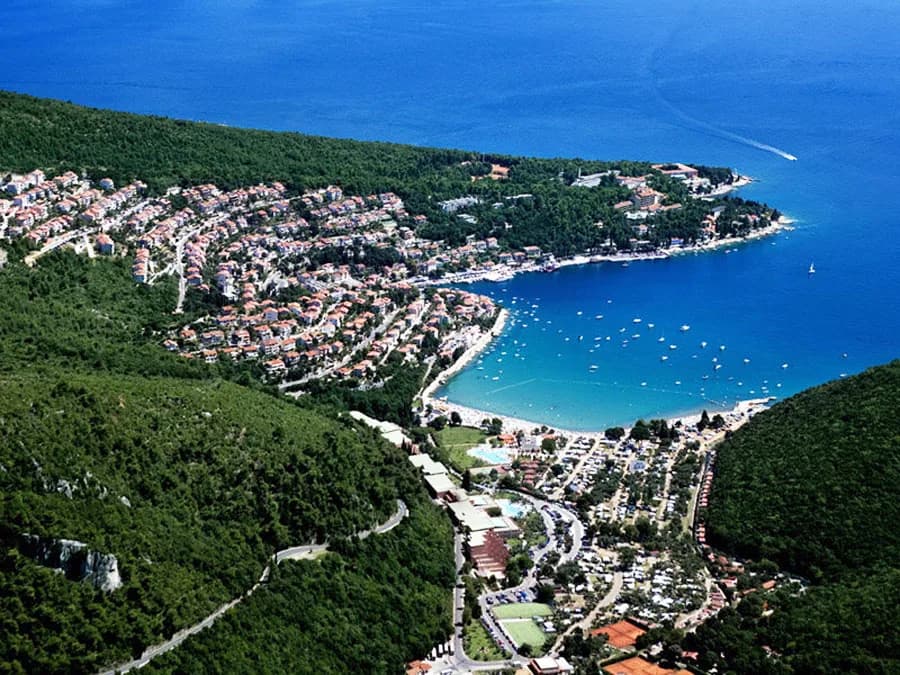
Labin - Rabac
Labin and Rabac are the most visited places on Istria’s east coast. But the other places in this part of Istria also have plenty to offer, and compared with the west coast they are far less crowded in summer. That makes holiday villas around Labin and Rabac a great choice for a quieter holiday by the sea. The old town of Labin, the seaside gem of Rabac, the local food of Trget and the holiday resort of Duga Uvala are just some of the highlights of the area. ## The old town of Labin Labin rises on a hill above the sea, and its old town is a maze of stone streets, squares and palaces. It houses galleries and artists’ workshops, and from the town’s viewpoints the view reaches towards the sea and the island of Cres. Labin is also a mining town: coal was mined in the area for over a century, and in 1921 the miners took power in the short-lived Labin Republic. The Labin Town Museum tells of that past. The reformer Matthias Flacius (Matija Vlačić Ilirik) also came from the town. ## Rabac and the sea Rabac is a former fishing village on a bay, now a resort with beaches and a promenade along the coast. The beaches in Rabac are mostly pebble and rock. Above eastern Istria rises Mount Učka, with the Učka Nature Park, where you can hike trails with views over the Kvarner. ## Where the villa is Lovely Istria has one villa in this area, in Viškovići, with four bedrooms and room for eight people. The sea is 1.6 km away and the nearest beach 3 km. The nearest village centre, Sveti Lovreč Labinski, is 1.1 km away, a restaurant 2.4 km, and a shop 2.2 km. These distances are measured on the map, as the crow flies, so the actual drive is usually longer. ## Food and drink Eastern Istria keeps to Istrian cooking: pasta with truffles and, in spring, wild asparagus, cured ham, cheeses, olive oil and fish from the bay. The konobas around Labin often serve home cooking with a glass of Malvazija or Teran.
1 house
Read more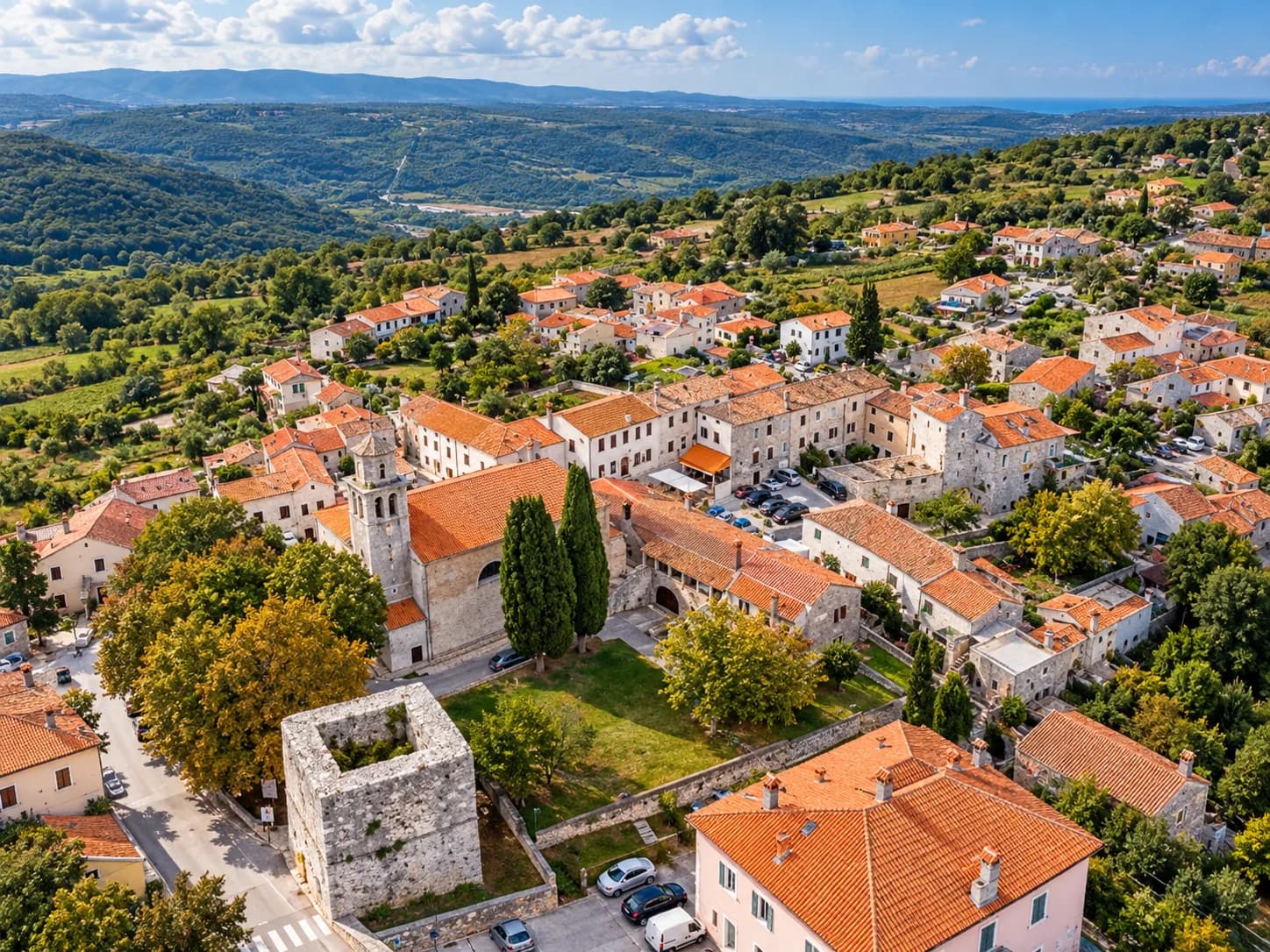
Marčana - Barban
This area between Pula and Labin, in the south-east of Istria, takes in Marčana, Barban and the surrounding villages such as Krnica, Rakalj, Marići, Sajini, Bokordići, Divšići and Orbanići. It is the Istria many travellers are looking for: stone houses, olive groves, fields and quiet country roads, with Pula, its beaches and the airport a short drive away. The Lovely Istria holiday villas here all have a private pool, and most stand among greenery, well away from the neighbours. That makes them a great choice for families and larger groups who want peace and privacy but still want the sea, restaurants and day trips close by. Barban is a medieval hilltop town, known for the Ring Race (Trka na prstenac), a traditional knights’ tournament held in summer. From here it is easy to reach both Pula and its Arena and the east coast with Labin and Rabac. ## Barban and the Istrian villages Barban, with its stone houses and narrow streets, sits on a hill with views over much of south-eastern Istria. The Ring Race (Trka na prstenac) takes place in summer, when the town fills with participants in historical costume and spectators from all over Istria. Marčana and the surrounding villages are quieter: stone houses, fields, olive groves and roads where you rarely meet traffic, which makes them pleasant for cycling or walking. ## The sea and day trips The sea is a few kilometres from most villas, and the beaches are pebbly and rocky, with clear water. In our villas’ data the nearest beaches include Barbariga, Šeničina and Maslenica. Pula with its Arena is a short drive to the south, and roads lead east to Labin and Rabac. ## Where the villas are We have 24 houses in this area, spread across many small villages: Barban, Marčana, Krnica, Rakalj, Orbanići, Divšići, Butkovići, Bokordići, Marići and Šajini. Some villas are less than a kilometre from the sea, most are around seven kilometres away, and the farthest is about 11 km. The village centre is often very close, from 80 m to a few kilometres, and a restaurant is typically about 3 km away and a shop about 2 km. The airport is 7 to 25 km away, mostly around 12 km. These distances are measured on the map, as the crow flies, so the actual drive is usually longer. ## Food and drink The village cooking of south-eastern Istria rests on olive oil, homemade cured ham and cheese, fuži and pljukanci, and meat from stone konobas, such as boškarin, the Istrian ox. Alongside it you drink white Malvazija and red Teran, and many hosts make their own wine and oil.
24 houses
Read more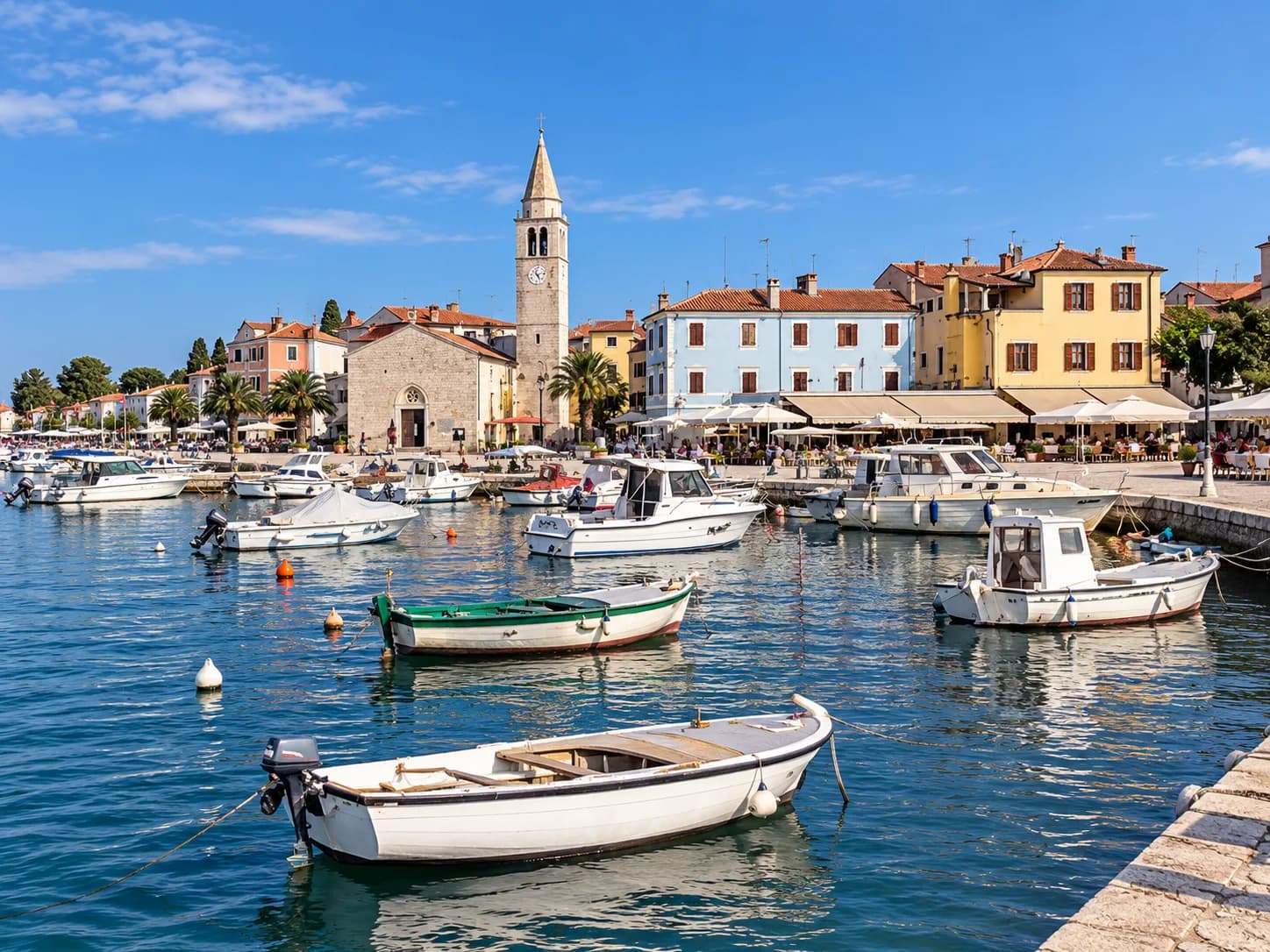
Vodnjan - Fažana
Vodnjan and Fažana lie just north of Pula on the west coast of southern Istria, and the area also takes in Galižana, Valbandon, Peroj and Gajana. It is a favourite because it brings everything together: the sea and beaches, olive groves and vineyards, and Pula a short drive away. Fažana is an old fishing town from where boats sail to Brijuni National Park, an island group with the remains of a Roman villa and a safari park. Peroj is a village founded in the 17th century by settlers from Montenegro, and Valbandon is a seaside holiday resort. Vodnjan is a medieval town whose Church of St Blaise has the tallest bell tower in Istria and houses its famous mummified saints. The Lovely Istria holiday villas in this area all have a private pool, and many are genuine stone houses in villages and olive groves, which makes them a great choice for families and larger groups. ## Fažana and Brijuni Fažana is a quiet fishing town whose harbour fills with fishing boats and excursion boats. From here a short boat trip leads to Brijuni, a national park of fourteen islands and islets. On Veliki Brijun, besides the safari park and the remains of a Roman villa, you can see fossil dinosaur footprints, and for decades the island was the summer residence of President Tito. In summer it is wise to check the boat departures in advance. ## Vodnjan and the villages Vodnjan, Dignano in Italian, has a narrow old town of stone houses and squares. Besides the church of St Blaise and its collection of mummified saints, the town itself and its olive groves are worth a look, as the area around Vodnjan is known for its olive oil. Valbandon and Fažana have seaside promenades, and Peroj is a small village on the coast. Pula is only a few kilometres to the south, so the Arena fits easily into a day. ## Where the villas are We have 28 houses in this area, most of them in Vodnjan, Valbandon and Galižana, and the others in Fažana, Peroj, Gajana and Sveti Kirin. They are between about 200 m and about 11 km from the sea, most of them around 4 km. A few are very close to a beach (from 420 m). The village centre is usually within a kilometre, and a restaurant and shop are mostly close at hand, from 100 to 150 m up to about a kilometre. Pula Airport is 5 to 14 km away, mostly around 8.5 km. These distances are measured on the map as the crow flies, so the actual drive is usually longer. ## Food and drink Fažana is known for fish and sardines, and Vodnjan for its olive oil. In the konobas around you eat homemade pasta, cured ham and cheese, with Malvazija and Teran to go with them. Buy your ingredients at the market in Pula and you can cook a whole Istrian meal on your own terrace.
29 houses
Read more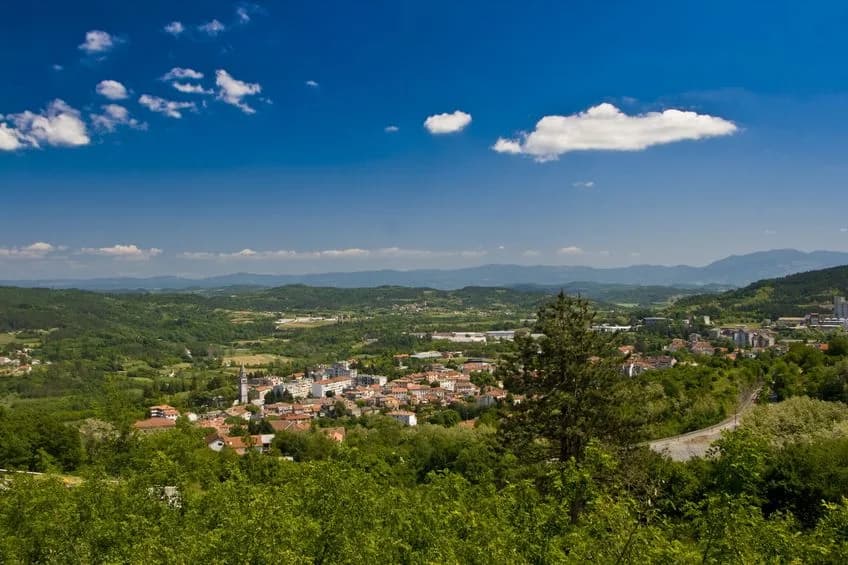
Central Istria
Central Istria, also known as Green Istria, is the true heart of the peninsula. Once unfairly overlooked by tourism, it is now being discovered by more and more visitors. Its small villages lie off the usual tourist routes, so you can enjoy their beauty even at the height of the season. In one of Lovely Istria’s many holiday villas near Pazin, Žminj and Sveti Lovreč, you can recharge your batteries and enjoy a truly relaxing holiday. On top of that, there are the delights of Istrian cuisine, olive oils that rank among the world’s best and excellent local wines. ## Hill towns and walls Central Istria is a landscape of hills, fields and small stone villages. Pazin has a medieval castle on the edge of a deep gorge, and that chasm inspired Jules Verne in his novel about Mathias Sandorf. Svetvinčenat has a Renaissance square framed by a castle and a church, where concerts and theatre are staged in summer. Near Kanfanar stand the ruins of the abandoned town of Dvigrad, and Gračišće is an old hill town with narrow streets and a view. In Beram, not far from Pazin, the church of St Mary on the Rocks holds frescoes, among them the well-known Dance of Death. Kringa is a village known for the legend of the vampire Jure Grando. ## Nature and quiet This part of Istria is green: oak woods, olive groves, vineyards and meadows. Walkers and cyclists find plenty of quiet routes between the villages, and there is little traffic even in season. The sea is far away, so this is an area for those who want a villa with a pool and treat the beach as a day trip. ## Where the villas are Lovely Istria has ten villas in central Istria, in Svetvinčenat, Žminj, Gračišće, Pazin, Kringa, Kanfanar, Laginji and Šivati. The sea is 8 to 20 km from here, most often about 13 km, and the nearest beach 9 to 20 km. The village centre is 790 m to 4.9 km away, most often about 2 km, a restaurant 570 m to 4.7 km, and a shop 850 m to 2.9 km. These distances are measured on the map, as the crow flies, so the actual drive is usually longer. ## Food and drink Central Istria is the home of Istrian cooking: fuži and pljukanci with goulash or truffles, maneštra soup, cured ham, cheeses and olive oil. Boškarin, the Istrian ox, is eaten here too, and the meal goes with Malvazija or Teran from the nearby wineries.
10 houses
Read more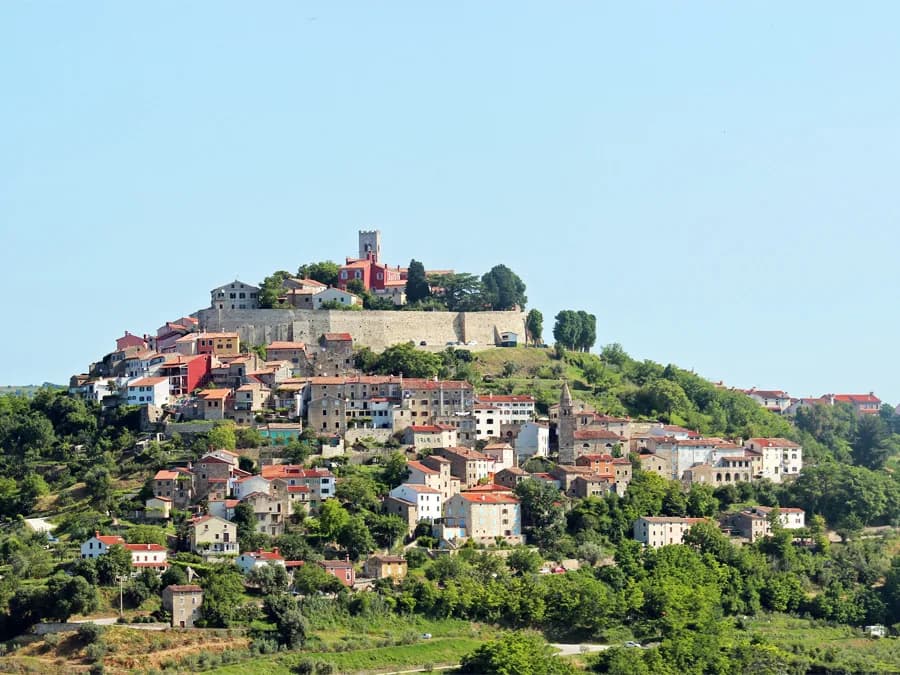
Motovun
Motovun is one of the most beautiful and best-preserved medieval hill towns in inland Istria. It stands on top of a hill, encircled by town walls, and the view from them stretches across the Mirna valley and the green hills around. At its foot lies the Motovun Forest, known for its truffles, and every summer the town hosts a well-known film festival. In this area Lovely Istria offers holiday villas in Livade, Karojba, Sterna near Oprtalj and the village of Dol near Buzet. All have a private pool, and most stand among olive groves and fields, far from the crowds. Livade is known for its truffles and lies on the Parenzana cycling trail, Karojba is a quiet village not far from Motovun, and Oprtalj is a small Istrian hill town above the valley. The sea is around fifteen kilometres away, so a peaceful stay inland is easy to combine with a day at the beach. Holiday life here has its own rhythm: morning coffee on the terrace, lunch with local ham, cheese and olive oil, wine and truffles from nearby konobas, and in the evening the view of lights across the hills. That makes villas around Motovun a good choice for families, couples and groups who want peace, stone houses and the real Istrian countryside. ## Motovun and the hill towns Motovun can be seen from far away: a stone town on top of a hill, reached by a road with views over the Mirna valley. The best part of a visit is a walk along the town walls, from which on a clear day you can see hills in all four directions. Inside the walls is a small square with stone houses, and below the town the forest where truffles are hunted. Other hill towns are easy to add to a day out. Grožnjan, not far away, is known for the artists working in its old houses. Oprtalj is quieter, with stone streets and a view across the valley, and from Buzet you can go on to Hum, a place that calls itself the smallest town in the world. ## Truffles and wine Truffles are the reason many people come to this area. In autumn, when white truffle season arrives, the konobas in Livade and around Motovun serve dishes with truffles, and some offer truffle hunts with dogs. Malvazija and Teran go with the truffles, and the local winemakers often welcome guests for tastings. ## Where the villas are Lovely Istria has seven villas in this area: three in Livade, two in Karojba, and one each in Sterna and near Buzet. The sea is far from here, about 15 km, and the beaches are not close either, so this is an area for a holiday by the pool, with the sea as a day trip. The village centre is 590 m to 5.2 km away, mostly around 2 km, and a restaurant is 730 m to 2.6 km away. These distances are measured on the map, as the crow flies, so the actual drive is usually longer. ## Food and drink The cooking here is at the heart of Istrian cuisine: fuži and pljukanci pasta with truffles, maneštra soup, cured ham, homemade cheeses and olive oil. Lunch in a konoba on a hill, with a view of the valley and a glass of wine, is the best way to get to know the area.
7 houses
Read more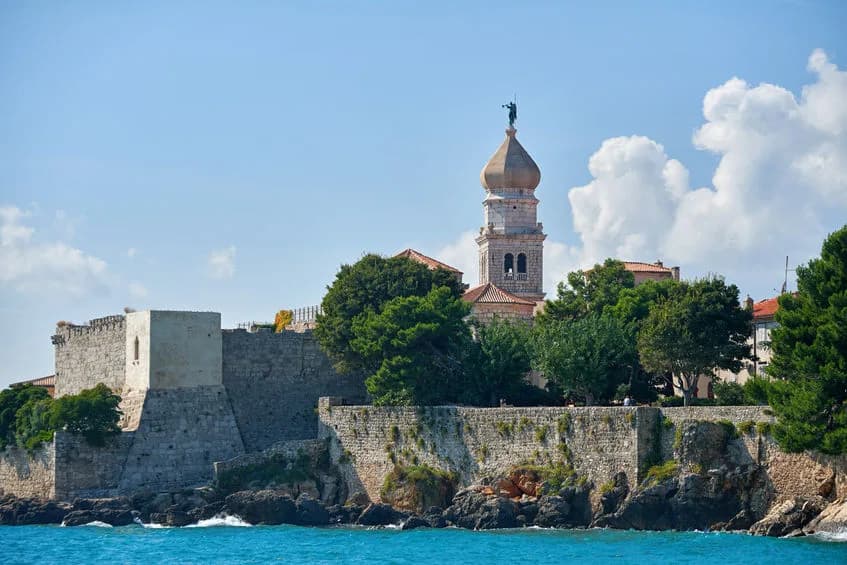
Krk
Krk, an island in the Kvarner Gulf, is the largest island in the Adriatic Sea and the Croatian island with the most settlements – as many as 68. Thanks to its location and good road links, it is more densely populated than the islands of Dalmatia. The best-known places on the island are Baška, Dobrinj, Klimno, Krk, Malinska, Njivice, Omišalj, Punat and Vrbnik. They are very varied and each has its own story, but they all share one thing: Krk is regarded as the cradle of Croatian culture. Many Glagolitic inscriptions have been found here, including the Baška Tablet, the most important monument of early Croatian literacy. In Krk town it is worth visiting the old town with its cathedral and the Frankopan castle, while Baška is known for Vela Plaža, a long pebble beach beneath the mountain. Krk is connected to the mainland by the Krk Bridge, and Rijeka Airport is on the island, so it is easy to reach from all over Europe. On the island Lovely Istria offers a villa in Risika, a village near Vrbnik, with a private pool and the sea about 1.4 kilometres away. Vrbnik is a small town on a cliff above the sea and the home of the native žlahtina wine grape. A mild climate, lush nature, sea air and good food, such as Krk sheep’s cheese and žlahtina wine, are just some of the reasons to choose a holiday villa on Krk. ## Krk town and Baška Krk town is one of the oldest towns on the Adriatic, and the old town is explored along narrow stone streets, from the cathedral to the Frankopan castle and the harbour with its small restaurants. Baška lies at the southern end of the island, beneath the mountain, and its Vela Plaža is a long pebble beach popular with families. Near Baška, in Jurandvor, stands the church of St Lucy, where the Baška Tablet, a key monument of Glagolitic script, comes from. Punat lies in a deep bay, and on the small island of Košljun in the bay stands a Franciscan monastery. Malinska and Njivice are quiet resorts on the north-west coast. ## Vrbnik and žlahtina Vrbnik is a small town on a cliff above the sea, with very narrow lanes and a view out to the open water. It is known for žlahtina, a white wine from a native grape variety, which can be tasted in family cellars. The village of Risika, where our villa is, lies close to Vrbnik. ## Where the villa is Lovely Istria has one villa on Krk, in Risika, with three bedrooms and room for six people. The sea and the nearest beach, Melska Bay, are 1.4 km away. The village centre is 240 m away, a shop 250 m, and a restaurant 3.8 km. These distances are measured on the map, as the crow flies, so the actual drive is usually longer. Rijeka Airport, which is on the island itself, is 13.8 km away in a straight line. ## Food and drink On Krk people eat šurlice, a hand-made pasta served with goulash, Krk cured ham, lamb and sheep’s cheese from the island. Žlahtina goes with it, and in the konobas fish from the Kvarner is often on the menu.
1 house
Read more